
Reading The Histories

Loading

I hadn’t always wanted to read Herodotus. He has a mixed reputation among historians, often cited as an unreliable source, gossip monger or simply as a fantasist. Sure, he’s the “father of history” as Cicero called him (or at least of historical writing) and penned the earliest surviving work of non-fiction, but he often doesn’t get the respect that, say, Thucydides gets for his efforts (dry as they might be at times). Herodotus has even been called the ‘father of lies‘ by some modern historians. Steve Donoghue noted: Herodotus’s widely acknowledged vulnerability has always been his affection for thomata, the ……… click below for more ↓
The News: A User’s Manual

Loading

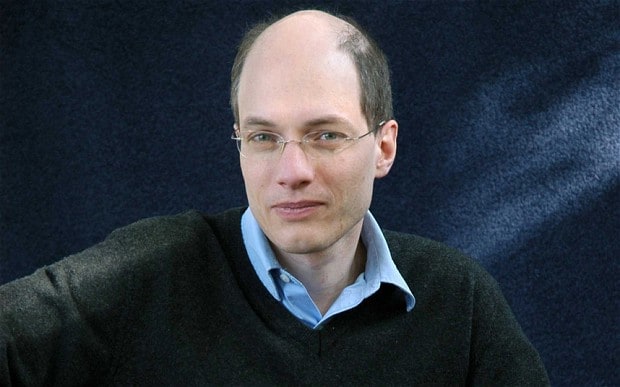
Alain de Botton attempts in his small book to give us a guide, to provide some larger, meaningful context, to the news we get 24/7 these days. I don’t think he succeeds very well. In part it’s because he sees news as something grandiose, world-moving, world-shaking. I’m more familiar with the local aspect; a much smaller scale. It may not appear to have the majestic sweep of international news, but it isn’t any less relevant. We are focused, collectively, on the US presidential campaigns and the interpersonal battles between Trump and Clinton. It’s a great drama of Homeric or Shakespearean proportion (albeit ……… click below for more ↓

Wolf Hall reviewed

Loading

I have just finished watching the six-part BBC series, Wolf Hall, based on the two novels by Hilary Mantel. I am also about halfway through my reading of the first of the two, Wolf Hall (with Bring up the Bodies waiting in the bedside pile). The series conflates the two novels into six one-hour episodes. Given the length of the novels (Wolf Hall is 650 pages itself), compacting them and retaining clarity, plot and drama is quite a feat. Normally, I would argue for the written word over the adaptation. Any adaptation. As good as they may be, it is rare ……… click below for more ↓

Fowler for the 21st Century

Loading

On the desk of every writer, every reporter, every editor, every PR director and every communications officer is a small library of reference books. A good dictionary (Oxford, American Heritage, Merriam Webster, Random House but gods forbid, never a generic Webster’s). A thesaurus (likely Roget’s). A style guide (CP for Canadians, or AP for Americans… Canadians likely have both).  A dictionary of quotations (because the print version is reliable as a source, and the Internet isn’t). And a usage guide. That’s de rigeur for these professions, and the very minimum that they likely have in front of them every time ……… click below for more ↓

Designing Type

Loading

Karen Cheng’s 2005  book, Designing Type, is the third of the recent books on typography I have received*. Of the three, it is the most technical, appealing to the typophile and design geek more than the average reader. But it’s also a reference for layout and graphic artists looking to choose a specific font for a work. If your goal is to actually design a typeface, she helps appreciate the subtleties of design that differentiate and separate typefaces and letterforms. But it’s not a book about design. Most books on type and typography focus on the result: working for the combination ……… click below for more ↓

Everything Flows

Loading

Tonight’s book-with-wine discussion is about Vasily Grossman‘s novel, Everything Flows (New York Review Book, USA, 2009). It was his final work, and left unfinished at the time of his death, in 1964. It’s not a difficult read, only 250 pages, but it isn’t easy. Readers unfamiliar with Soviet history, particularly the Stalin era, will not understand much of it. And it’s hardly a cheerful work. Not that everything Russian is a slit-your-wrist work, but it’s certainly Dostoevsky-like in its darkness. Grossman was a Soviet war correspondent during WWII and travelled with the Red Army through Moscow, Stalingrad, Kursk then into ……… click below for more ↓

Frutiger vs Palatino

Loading

In a recent review of Sarah Hyndman’s book, Why Fonts Matter, I casually commented that, You can no more adequately comment on the relevance and impact on the viewer of, say, Frutiger versus Palatino, without discussing the design and layout in which it is set… The point of which was not to single out those two typefaces as much as to suggest the debate between how readers respond to sans-serif and serif faces (respectively). Fruitiger is a modern, humanist sans-serif type designed by Adrian Frutiger in 1975. Palatino is a serif type designed by Hermann Zapf, in 1948, to simulate ……… click below for more ↓

Reading Letters: Designing for Legibility

Loading

The human brain is truly a remarkable machine.* We can see a bunch of lines and in that same brain turn them into an M and know it’s not a V or an N or a K or W. Yet M isn’t a ‘thing’ – it’s an abstract representation of a sound that itself has no concrete meaning outside the Mmmmm of meditation. When you mentally assemble a bunch of other lines and sticks and squiggles, those sounds form a larger abstraction: a word: MOON. Now we have substance. And that can be used to create even larger collections of ……… click below for more ↓

Why Fonts Matter

Loading

The first problem I have when receiving a new book on typography is that I spend far too much time looking up the typefaces described or sampled therein, and searching for them online, instead of reading. Then I start looking at (and critiquing) the typefaces chosen for the book itself. It’s a trees-not-the-forest kind of wonderment that comes over me. As I am wont to do, I sit back on my deck in the evening sun, glass of wine in hand, and a large pile of previously-purchased typography books beside me, so I can make the introductions. Probably not necessary, ……… click below for more ↓

Power, ambition, backstabbing

Loading

Power grabs. Backstabbing. Lust. Ambition. Conniving. Hypocrisy. A weak but well-meaning ruler. A grasping second in command who viciously usurps power. A bureaucrat jealous of the nobles, jockeying for power and trading favours to get his way. Sleazy nobles selling their loyalty for petty trinkets. A cast of despicable, grasping characters all out for themselves, oblivious of the cost of their machinations on the common people, and willing to tread on anyone who gets in their way. Machiavellian plots and secret meetings. The destruction of state institutions and facilities. Heads rolling. Collingwood Council? No: Shakespeare’s three-part extravaganza, Henry VI. Although you have ……… click below for more ↓

The Postmortal

Loading

Mortality. We all get it. It’s the one one incurable ailment all humans succumb to without a chance of succor. Mortality is always 100% fatal. No medicine, no therapy, no diet cure or magic pill. But as you read this, scientists are researching, seeking clues to unlock the mystery and, potentially, cure us of aging,of death by mortality. And they might achieve it. Having officially reached the two-thirds mark in my life this past weekend (based on my family history, my health and my lifestyle…), mortality is more often in my own thoughts these days. Not morbidly so, but certainly more ……… click below for more ↓

More relevant words from Nixonland

Loading

Once again, as I continue to read through Anthony Summers’ biography of Richard Nixon, The Arrogance of Power (Penguin Books, 2000), I am struck by the uncanny resonance of many comments quoted within it to local politics. It’s like people living in the 1950s had a device through which they could view the politics of today, see the politicians on our own council and were reflecting on them, instead of their contemporaries. Some time viewing device right out of science fiction. Of course, we know they are speaking and writing of Richard Nixon and his activities, but nonetheless… the word ……… click below for more ↓

Alger Hiss, Richard Nixon and Collingwood

Loading

Remember the case of Alger Hiss? I didn’t think so. It was before your time. Mine too. But let me jog your memory, just in case you’re older than I am. Or perhaps just well read in recent history. Hiss was a US government employee, a diplomat at the centre of a House Un-American Advisory Committee (HUAC) investigation in 1950. He was accused of being a Soviet spy and eventually sent to jail (coincidentally on the same day George Orwell died…). Ring a bell? How about the Pumpkin Papers? Remember HUAC? You know, the committee investigating Communism in America, the one that ……… click below for more ↓

Demagogues and dictators

Loading

I’m not sure why they fascinate me, but I’ve been reading about demagogues and dictators for many decades now and still can’t seem to get enough of them. Of course, it’s in part because I like to read about politics in all its forms and fashions, but there’s something more than just celebrity watching with these. There’s the psychology of propaganda and mass movements, the inoculation of widespread ideologies, the use of technology and mass culture. The period between the two World Wars in particular intrigues me because it was an era of great social change. Upheaval, really. The rise of the ……… click below for more ↓

The Leadership Crisis

Loading

In his latest book, The Leadership Crisis, Gord Hume defines seven characteristics – the Seven Cs – of great political leadership*. See how many you can recognize as attributes within our own council: Competencies, including people, organizational, business and strategic. Character, and its traits, values and virtues; integrity. Commitment, including aspiration, engagement, perseverance and sacrifice. Charisma, that unquantifiable attribute that political leaders either have or don’t. Communication, through effective messaging that inspires, informs and influences. Context, an understanding of what’s going on around them. Culture, and how to develop, create, change and advance that culture I think you can see ……… click below for more ↓

Back to Top