
Empathy and The Dog Allusion

Loading

Empathy, writes Martin Rowson, is one of the things that make us human, make us civilized, allows us to interact without tearing one another’s throats out. Without it, we’d have no civilization; we’d be like the beasts of the fields. And we’d have no dogs or gods, either. Empathy is what makes us own pets and be religious. That’s one of the thought-provoking ideas Rowson tosses around in his book, The Dog Allusion (Vintage Books, London, 2008). The title, as I’m sure you are aware, is a pun on Richard Dawkins’ book, The God Delusion. Rowson has a lot to ……… click below for more ↓
Reading Moby Dick

Loading

Recently, coincidental to while I was reading Herman Melville’s classic novel, I read a story that some folks in Vancouver took offence to the name of a restaurant: Moby Dick’s Fish & Chips. Apparently the property overseers mistook the “Dick” in the name for a euphemism for penis, rather than reading the name of the famous novel in the whole title. A wholly puerile response, I’m sure you can agree. Perhaps many people in Vancouver haven’t even heard of the book, let alone read it, otherwise why would anyone protest? Which is a much sadder statement that the one about ……… click below for more ↓

Auden, Trump and poetry

Loading

There’s a poem by W. H. Auden (1907-73) going the internet rounds these days with suggestions of Auden’s prescience towards the latest American president and contemporary politics. It’s a powerful piece, but the bad news for conspiracy theorists is that Auden was a poet, not a prophet. A good poet, even a great poet, mind you, but not one to predict much of anything outside the local reaches of the human heart. Yes, yes, I know: it’s unusual, perhaps bordering on blasphemy, to put poetry in the same headline as the notorious philistine, but worlds do collide at times, even ……… click below for more ↓

On growing old

Loading

No man is so old that he does not think himself able to live another year. (Nemo enim est tam senex qui se annum non putet posse vivere) I was thinking of that line from Cicero this week when I attended a friend’s drop-in post-Christmas party. Most of the many people in attendance were my age or older. Few were under 50. All were active, engaged, alert, conversing and despite the relentless march of time, as alive that evening as they had ever been in their lives. And I suspect most, like me, believe they have many more years, even ……… click below for more ↓

The vulgar crowd

Loading

Profanum vulgus. The vulgar crowd. Not, however, as you might suspect, an apt description of the remaining few supporters of The Block that rules Collingwood Council. While perhaps appropriately described, to me that small handful are better described as naïve, gullible and even intellectually vulnerable, moreso than merely vulgar. But that’s not what this post is about. Odi profanum volgus et arceo. The words open the first ode in Horace’s third book (Carminum Liber Tertius): I shun the profane crowd. Or the uninitiated crowd. The rabble, or mob. As A.S.Kline translates it: I hate the vulgar crowd, and keep them ……… click below for more ↓

Eheu fugaces, Postume…

Loading

Alas, Postumus, the swift years slip away. Those words are one translation of the opening line of the 14th Ode in the second book of Horace’s carminas, or songs: Eheu fugaces, Postume, Postume/labuntur anni… * For me, it’s his most moving piece, a bittersweet acceptance of mortality; the inevitability of age and death. Something no one in his or her sixties cannot help but think about. And about which Horace wrote several times. Many of Horace’s poems are moving; very down to earth. His most touching odes read not so much as poetry meant for a wide audience, but rather ……… click below for more ↓

The subtle art of Mark Manson

Loading

I have a healthy skepticism towards anything labelled a “self-help” book – especially those that aim at making your life happier or more fulfilled through some fad, superstition or pseudoscience. I am, as you know from this blog, cynical towards the unending volume of New Age woo hoo, fads and pseudoscience that pollutes bookstore shelves and the internet. I’m more of the “life’s a bitch and then you die” outlook kind-of-person than someone in search of a happy-platitude guru. I don’t post pictures of kittens, puppies or angels on my Facebook timeline. I’ve never been into that cosmic happiness-bucket list ……… click below for more ↓

Does anyone still read books?

Loading

I came across an early version of this infographic on Facebook and it shook me to my core. You can see it here. The updated and corrected infographic is shown to the right. It is only marginally less distressing than the earlier one. Unfortunately, the early one, although inaccurate and misleading, is still being shared. That early graphic is based on some disputed statistics and unfounded claims, but it’s worth examining to understand my reaction. Reading is so central to my life that the notion that anyone would stop reading books simply gobsmacks me. I can barely go eight hours ……… click below for more ↓

Horace and him. And maybe me, too.

Loading

Horace and Me, subtitled Life lessons from an Ancient Poet, is a recent book by Harry Eyres (Farrar, Strauss & Giroux, 2013) about his efforts to connect the dots of his modern life to meaning via the ancient circuitry of a classical Latin poet. It attracted me because these past few years I have been reading such classics – albeit without the classical education or Latin learning of Eyres and other writers who have recently returned to the Latin and Greek authors. Any help I can get along the way is welcome. Horace – more properly Quintus Horatius Flaccus – was a Roman ……… click below for more ↓

13 Ways to Kill Collingwood

Loading

I found it! I stumbled across the secret manifesto The Block is using to destroy Collingwood. It’s in a book called “13 Ways to Kill Your Community” (Frontenac House, 2010) by Doug Griffiths and Kelley Clemmer. And pretty much everything in it outlines The Block’s not-so-secret plan to turn this community into rubbish. I know, you’re going to object, “But Ian, you know The Block doesn’t read! How can something as big as a book be their secret manifesto when they won’t even read Municipal World or their own budget?” Because, dear reader, the book was written in 2010, before ……… click below for more ↓

Reading The Histories

Loading

I hadn’t always wanted to read Herodotus. He has a mixed reputation among historians, often cited as an unreliable source, gossip monger or simply as a fantasist. Sure, he’s the “father of history” as Cicero called him (or at least of historical writing) and penned the earliest surviving work of non-fiction, but he often doesn’t get the respect that, say, Thucydides gets for his efforts (dry as they might be at times). Herodotus has even been called the ‘father of lies‘ by some modern historians. Steve Donoghue noted: Herodotus’s widely acknowledged vulnerability has always been his affection for thomata, the ……… click below for more ↓

The News: A User’s Manual

Loading

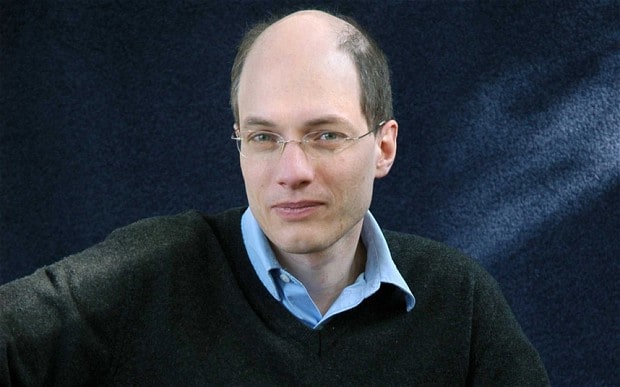
Alain de Botton attempts in his small book to give us a guide, to provide some larger, meaningful context, to the news we get 24/7 these days. I don’t think he succeeds very well. In part it’s because he sees news as something grandiose, world-moving, world-shaking. I’m more familiar with the local aspect; a much smaller scale. It may not appear to have the majestic sweep of international news, but it isn’t any less relevant. We are focused, collectively, on the US presidential campaigns and the interpersonal battles between Trump and Clinton. It’s a great drama of Homeric or Shakespearean proportion (albeit ……… click below for more ↓

Wolf Hall reviewed

Loading

I have just finished watching the six-part BBC series, Wolf Hall, based on the two novels by Hilary Mantel. I am also about halfway through my reading of the first of the two, Wolf Hall (with Bring up the Bodies waiting in the bedside pile). The series conflates the two novels into six one-hour episodes. Given the length of the novels (Wolf Hall is 650 pages itself), compacting them and retaining clarity, plot and drama is quite a feat. Normally, I would argue for the written word over the adaptation. Any adaptation. As good as they may be, it is rare ……… click below for more ↓

Fowler for the 21st Century

Loading

On the desk of every writer, every reporter, every editor, every PR director and every communications officer is a small library of reference books. A good dictionary (Oxford, American Heritage, Merriam Webster, Random House but gods forbid, never a generic Webster’s). A thesaurus (likely Roget’s). A style guide (CP for Canadians, or AP for Americans… Canadians likely have both).  A dictionary of quotations (because the print version is reliable as a source, and the Internet isn’t). And a usage guide. That’s de rigeur for these professions, and the very minimum that they likely have in front of them every time ……… click below for more ↓

Designing Type

Loading

Karen Cheng’s 2005  book, Designing Type, is the third of the recent books on typography I have received*. Of the three, it is the most technical, appealing to the typophile and design geek more than the average reader. But it’s also a reference for layout and graphic artists looking to choose a specific font for a work. If your goal is to actually design a typeface, she helps appreciate the subtleties of design that differentiate and separate typefaces and letterforms. But it’s not a book about design. Most books on type and typography focus on the result: working for the combination ……… click below for more ↓

Back to Top