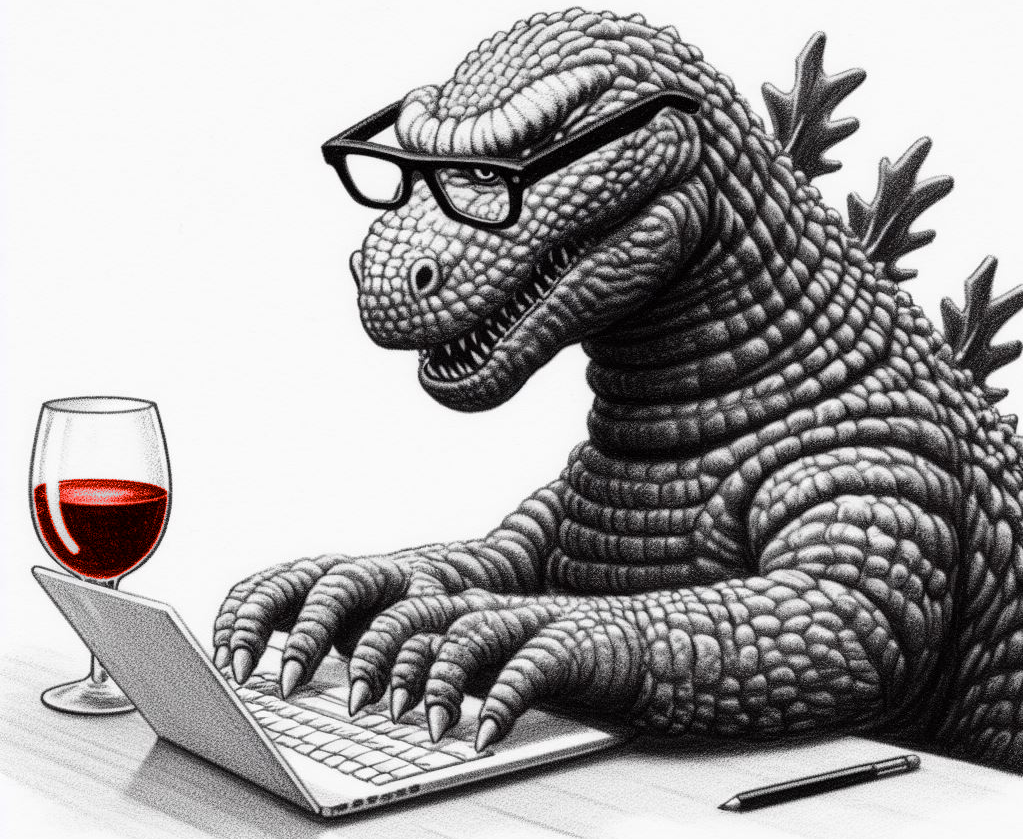
Why Master Sun Matters Today

Loading

Master Sun was a wise man. So wise that his famous treatise, The Art of War (aka The Art of Warfare), has been read, written about, critiqued, and discussed for roughly 2,400 years. It has been used as a model of strategy and leadership for the military, for business, romance, sports, and for politics. And, like Machiavelli’s The Prince, it has often been misused, misunderstood, and misinterpreted for those purposes.* It’s a short book: a mere 13 chapters written in generally brief aphorisms. And, very much like The Prince, it’s one of the most often-quoted and referred-to of unread books, ……… click below for more ↓

Musings on Poets and Poetry

Loading

For me, reading the American literary critic, Harold Bloom, is often like wading in molasses. Intellectual molasses, to be sure, but slow going nonetheless. His writing is thick with difficult ideas and difficult words. Bloom’s historical reach, his knowledge and his understanding of the tapestry of literature far outstrip mine, so I find myself scuttling to the Net or other books on my shelf for collateral references, for critical commentary, and often to the dictionary. Bloom’s commentaries and essays are a challenge to me because his terms of reference are so much greater than my own. Hence my appreciation of ……… click below for more ↓

The Cancer Diaries, Part 26

Loading

Cancer changes everything — and nothing at all. Rabbi Skillman That’s a profound comment, coming from a TV character. The “rabbi” in question is a fictional patient in hospital, played by George Wyner in the TV series, New Amsterdam (Season 1 Episode 8). He is talking to the hospital’s medical director, Dr. Max Goodwin (played by Ryan Eggold).  Cancer — its diagnosis, treatment, and impact on people — plays a pivotal role in the series, and offers some food for thought for viewers. This episode stayed with me for quite some time. Skillman suffers from terminal pancreatic cancer. It’s a ……… click below for more ↓

The Godzilla Soundtracks

Loading

https://www.youtube.com/watch?v=PDeU42u2s2Y Akira Ifukube. If you’re not an aficionado of Japanese film or a follower of Japanese symphonic music, his name won’t be familiar. But for millions of kaiju fans around the world, he is a legend. He composed the music and soundtracks for many of the Godzilla films, as well as many scifi and other films produced by the Toho film corporation. He has been ranked among the world’s great film composers along with people like John Williams, Ennio Morricone, and Nino Rota.* I spent some time reading about the classically-trained Ifukube this past week after I received two CDs ……… click below for more ↓

Musings of a B-Film Junkie

Loading

I put a DVD of the 1939 film, The Gorilla, into the player and sat back to watch. Bela Lugosi (above, centre) starred beside the Ritz Brothers (trio above), a popular American comedy trio contemporary with the Three Stooges, Abbott and Costello, and the Marx Brothers. This would be the last year the Ritz Brothers worked for Fox; they stopped making films entirely in 1943. It’s the first full film of theirs I’ve seen, but am not impressed. Lugosi is best known for his starring role in the 1931 film, Dracula. After which he was typecast as the villain, mostly ……… click below for more ↓

Point to Point: The Book From the Ground

Loading

A few years back, during one of our Toronto mini-vacations, I was browsing in the shop of the Art Gallery of Ontario, and I came across a small book that had no words, just pictures. No, it wasn’t a book with pictures of artworks or photographs: it was a story, told entirely through common icons, symbols, and emoticons. Pictograms, looking not unlike a modernized version of Egyptian hieroglyphs. There wasn’t even a book title on the cover. There were no instructions, no guides, no hints, no translations. The reader had to figure out what the story was about by him- ……… click below for more ↓

Darmok and Jalad at Tanagra

Loading

We recently watched the Darmok episode of Star Trek: The Next Generation, my third time seeing it, and I was struck again at how brilliant and quirky it was. Possibly the best of all the ST:NG’s 178 episodes. And, apparently, a lot of other fans agree with my assessment. Wikipedia describes it: The alien species introduced in this episode is noted for speaking in metaphors, such as “Temba, his arms wide”, which are indecipherable to the universal translator normally used in the television series to allow communication across different languages. Captain Picard is abducted by these aliens and marooned with ……… click below for more ↓

Still Watching the Three Stooges

Loading

There’s a bittersweet pleasure in watching the Three Stooges these days, knowing about them, their careers, their lives. What seems like zany comedy on screen was, like so many celebrity stories, much more complex, contentious, and even tragic at times. But there’s also an insuppressible joy in their work that keeps drawing me back to watch more. Moe, Larry, and Curly (and Shemp) will always bring a smile to my face. The subsequent replacements for Curly sometimes will, too, although not as often. And with more than 200 film credits to their names, running from 1930 to 1970 in both ……… click below for more ↓

Remembrance Day thoughts

Loading

An article on the Global News site titled “Fewer Canadians plan to wear poppies this Remembrance Day, poll finds” made me think again about what Remembrance Day is for. The article opens: Fewer people plan to participate in Remembrance Day ceremonies or wear poppies this year, according to a poll from Historica Canada that also suggests knowledge of Canadian military history is dwindling. To be fair, I’d suggest knowledge of pretty much everything factual is dwindling. One only need look at social media posts from anti-vaxxers, or anti-maskers to see how much knowledge of science and medicine has been lost ……… click below for more ↓

The Long Read Lost

Loading

“What we read, how we read, and why we read change how we think, changes that are continuing now at a faster pace,” wrote Maryanne Wolf, a neuroscientist, in her book, Reader, Come Home: The Reading Brain in the Digital World (Harper Paperbacks, 2019). It’s the sequel to her previous book on reading and neuroscience, Proust and the Squid (Harper, 2007). In that latter book, Wolf famously wrote, We are not only what we read, we are how we read. Reading — Marcel Proust called it a “fertile miracle of communication effected in solitude” — is a breathtakingly remarkable, and ……… click below for more ↓

Bring Back the Salons

Loading

Today if someone mentions a “salon” you probably think about a haircut or manicure. But in the 18th century, prior to the French Revolution, salons were the focus of civil debate, intellectual curiosity, and culture. They were  centres of discussion on everything from manners to literature to philosophy to science. And they were run by women. Salons were the bright stars of the Enlightenment; cauldrons of intellectual, cultural, and social development. More than ever, we need a salon culture today. Social media is driving us to ignorance, stupidity, rigidly polarized views, and a culture of confrontation and abuse. Guests to ……… click below for more ↓

It’s *NOT* Junk Mail

Loading

I recognize that we all like to apply labels to categorize things, as shorthand in communication and in conversation, and to identify common views and beliefs. I do it myself; we all do: labels are our everyday metaphors. They are fast and easy shortcuts. But I weary at times of trying to explain to people that the unsolicited material they get in their mailboxes several times a week is not simply “junk” mail to be tossed into the recycling bin without another thought. Or worse: at their community mailboxes some people simply litter it rather than taking it home to ……… click below for more ↓

Manners? Civility? What happened to them?

Loading

I was sitting in my car on main street, recently, waiting for a break in the traffic so I could back out and drive on. My backup lights were lit, my turn signal flashing, so drivers knew I was trying to exit. The parking downtown is nose-first, angled to the sidewalk, so you need to back into the oncoming traffic lane to leave. All I needed was a single driver to stop and allow me out. A few seconds of someone’s time. But even though the traffic light stopped the cars, drivers still came up right behind me to block ……… click below for more ↓

Shakespeare’s Mirror

Loading

Grant that, and then is death a benefit. So are we Caesar’s friends, that have abridged His time of fearing death. Stoop, Romans, stoop, And let us bathe our hands in Caesar’s blood Up to the elbows and besmear our swords. Then walk we forth, even to the marketplace, And, waving our red weapons o’er our heads, Let’s all cry “Peace, freedom, and liberty!” Shakespeare: Julius Caesar Act 3 Sc 1. I was thinking about this play and how well it related to the events of this era, a time when Trump’s domestic terrorists are killing their fellow citizens. A ……… click below for more ↓

The Penguin Classics Book

Loading

Did you know there is a card game played in Japan at the New Year, called uta-garuta, where 100 cards have a full poem on each — traditionally taken from their classical poets — and another 100 have just the final line. Players take turn reading the poem from the deck, while the others race to find its concluding line from the cards with the final lines. I didn’t until I read about it on page 111 of The Penguin Classics Book, by Henry Eliot. (I think that’s a wonderful game idea and wish someone would do a similar game ……… click below for more ↓

Back to Top